


The Requirements
A specialist manufacturer of bespoke timber roof trusses and floor joists approached Hoist UK to provide an overhead crane within their newly constructed production shed.
The crane was required to support general manufacturing and material handling operations within the facility. Hoist UK carried out a full site survey and measure-up of the portal frame building and worked closely with the customer to determine the correct safe working load, span and structural arrangement.
Due to the building steelwork design, the crane span was influenced by the available height within the structure. Hoist UK provided technical support to ensure the crane configuration delivered the lifting height required whilst accommodating the building layout.
Approval drawings were issued and agreed prior to manufacture.
The geometry of the portal frame building required the crane structure to be coordinated carefully with the existing steelwork to maximise lifting height within the available space.
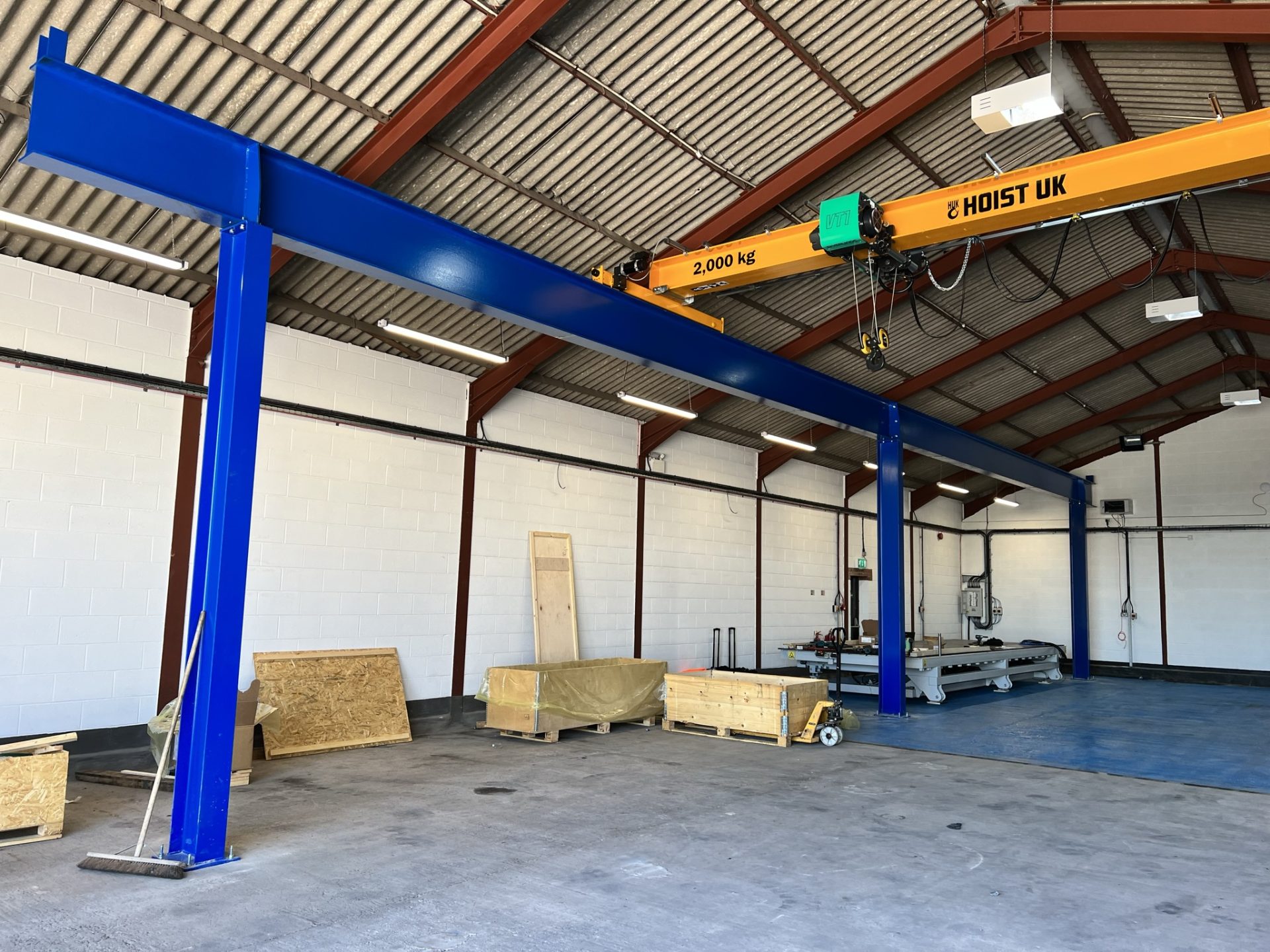
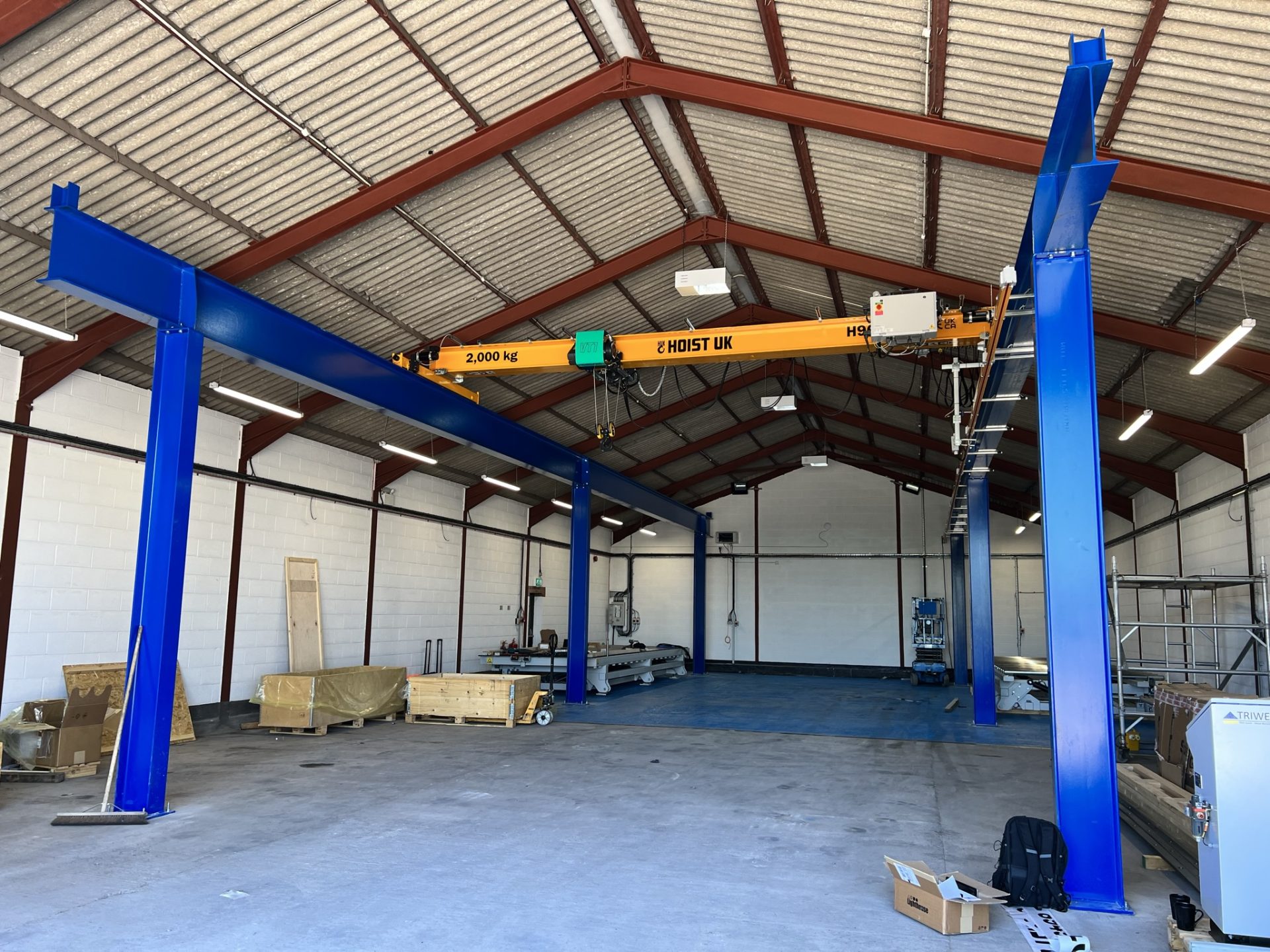
Stanchion positions were agreed with the customer to suit their machinery layout, resulting in 9.5 metre bays between runway centres. The gantry steelwork was designed to accommodate these bay dimensions.
Clearances between the crane structure and the building frame were tight and were identified during the survey stage prior to installation.
To reduce programme time, the bridge beam and associated crane components were delivered to site and assembled in position.
The Solution
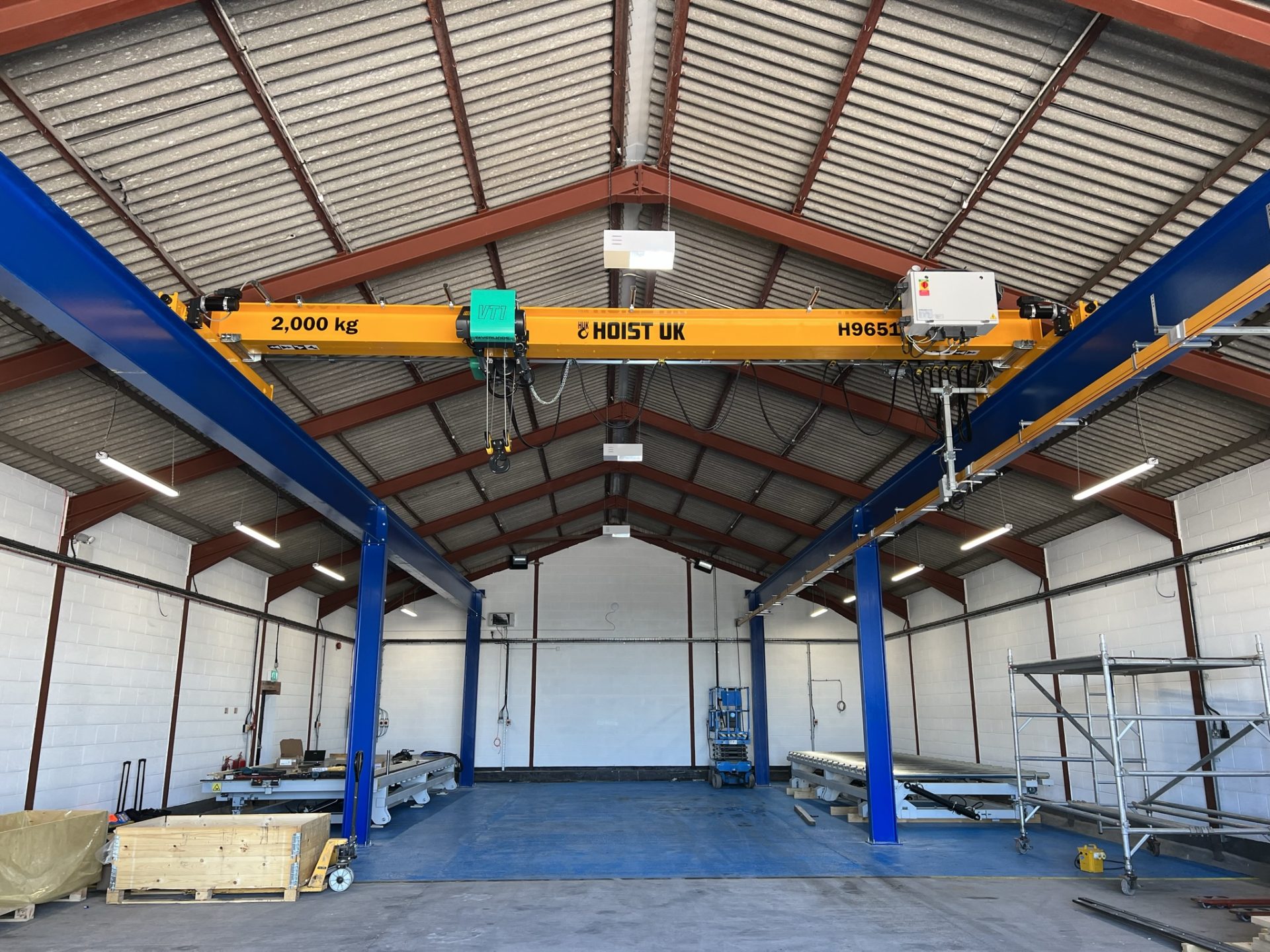
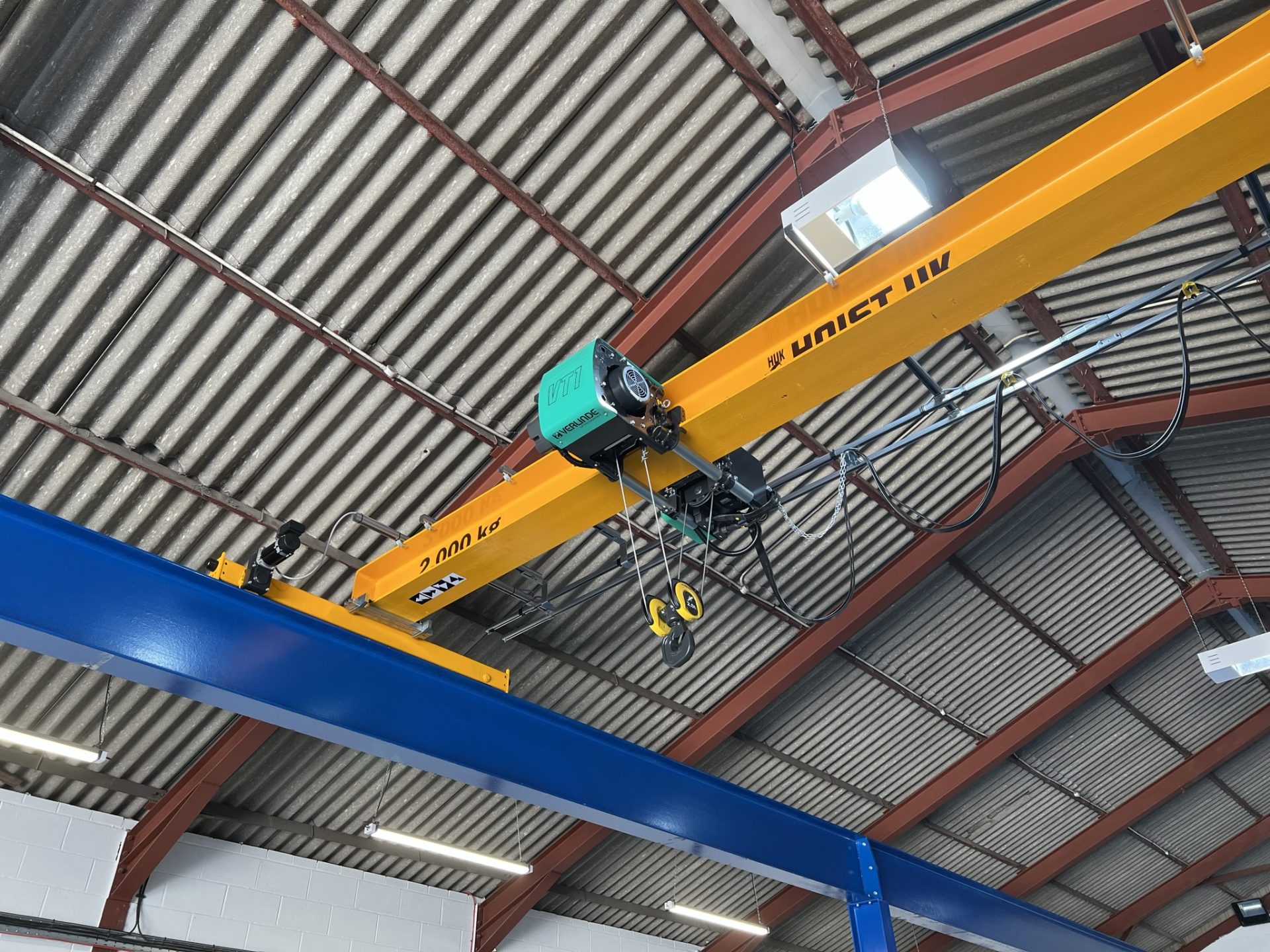
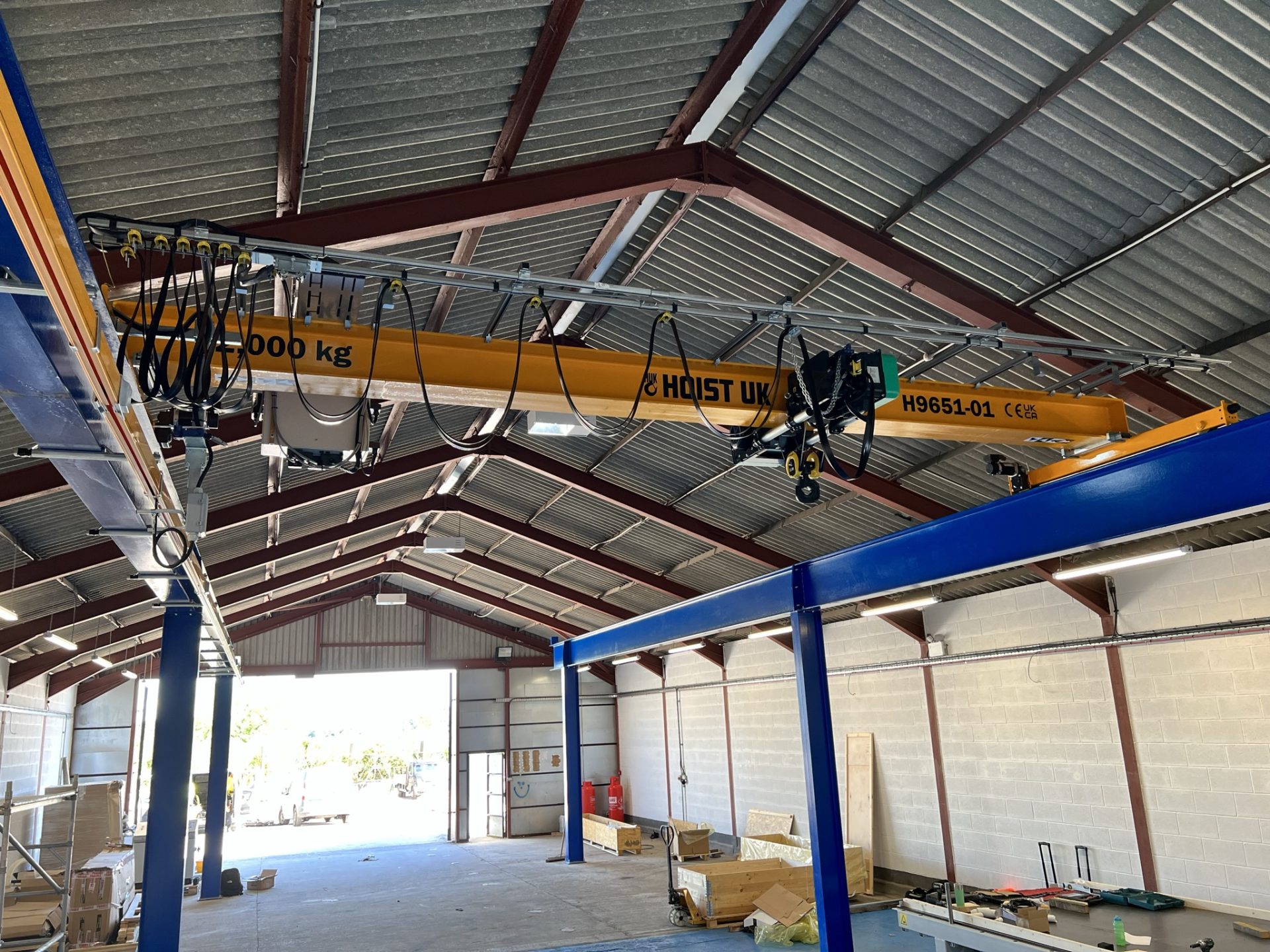
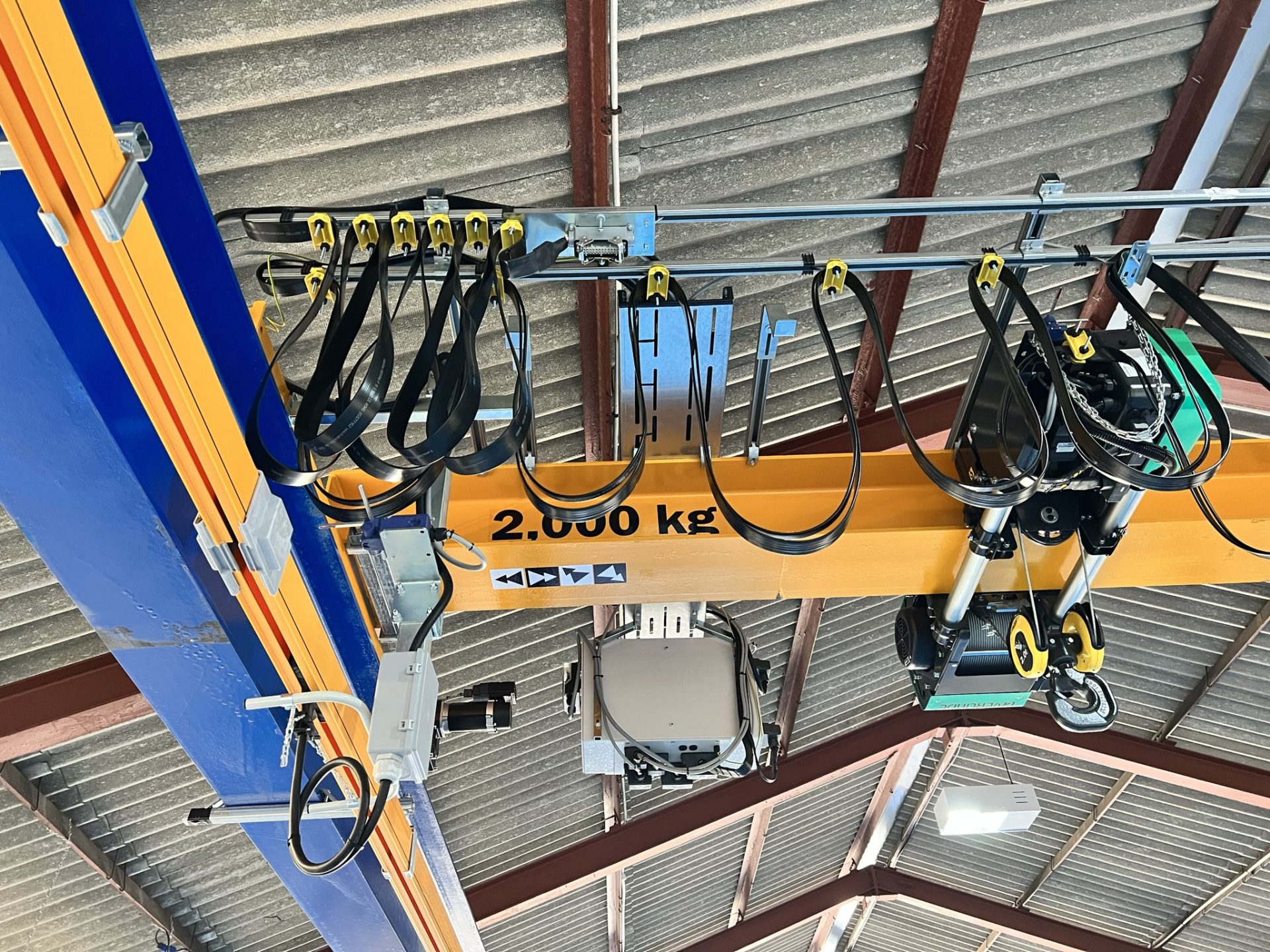
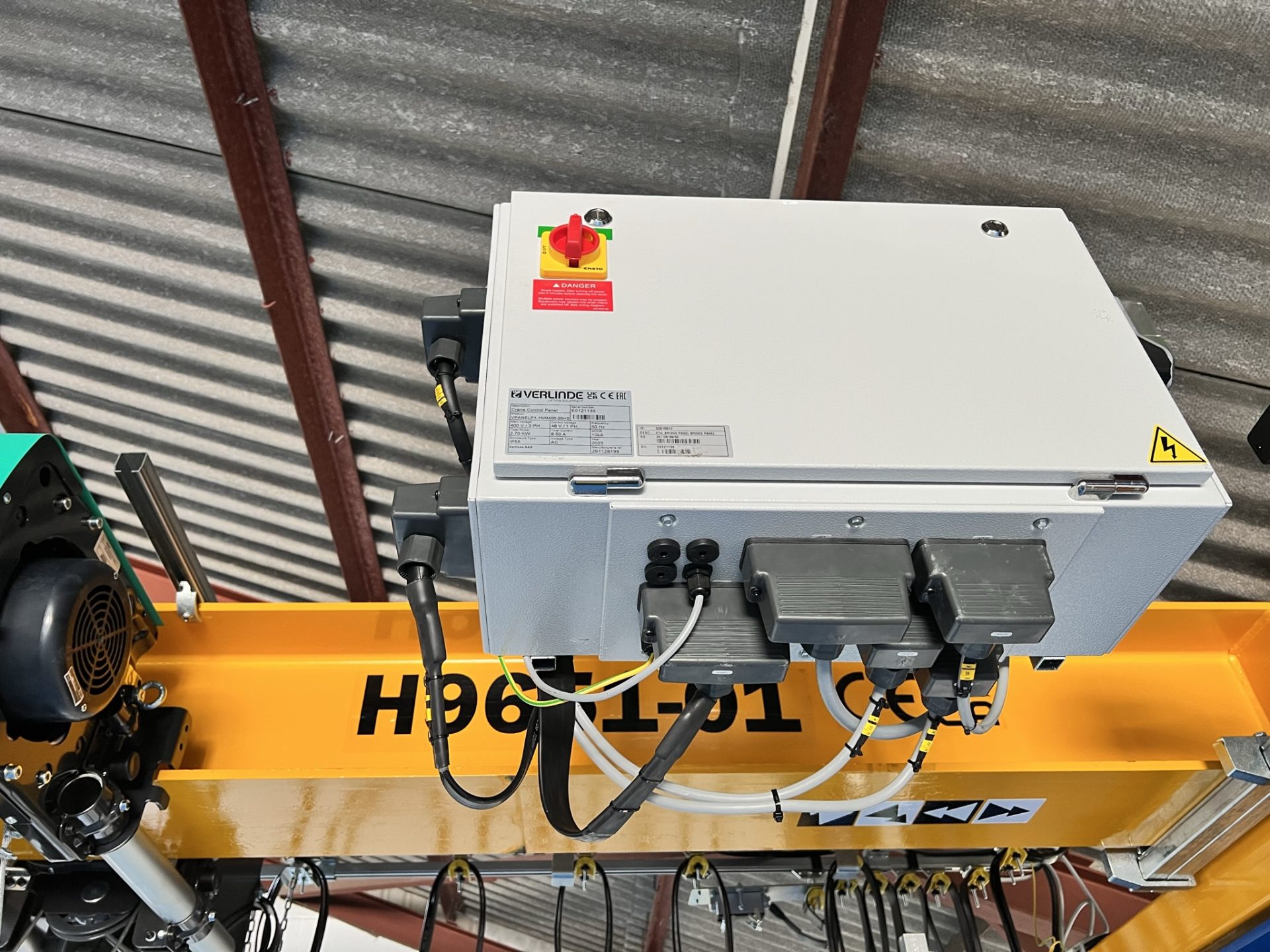
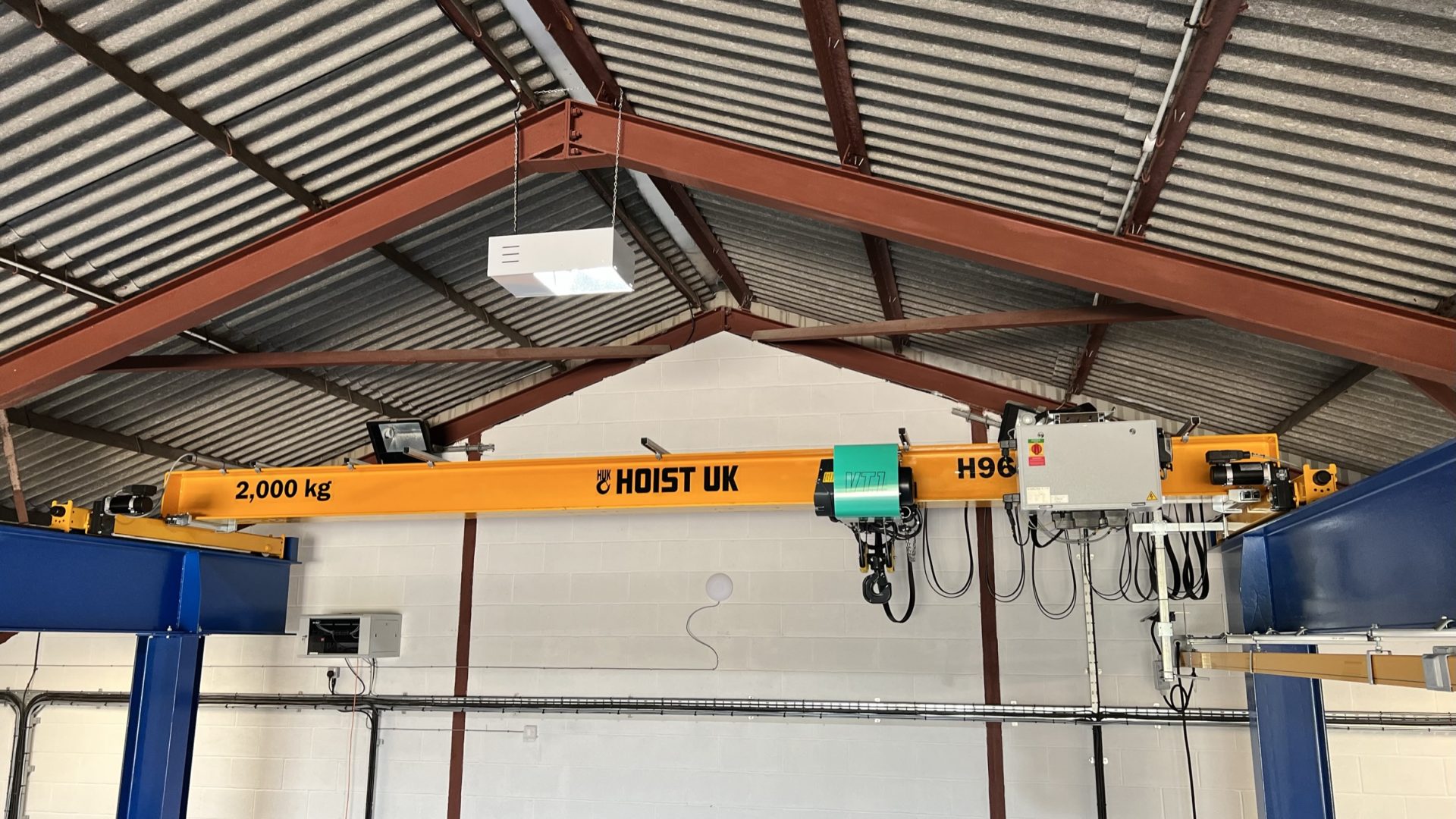
Hoist UK manufactured the freestanding gantry steelwork in-house and supplied a top-running overhead crane complete with a Verlinde VT1 wire rope hoist.
The crane was specified with a 2,000 kg safe working load, a 6.5 metre bridge span and a total runway length of 21.4 metres. The gantry steelwork was manufactured to an overall height of approximately 4.3 metres, providing a lifting height of just over 4 metres within the portal frame building.
Whilst an electric chain hoist would normally be specified for a 2,000 kg rated capacity, Hoist UK selected a VT wire rope hoist with a low headroom trolley configuration to maximise available hook height within the building steelwork constraints and provide a robust lifting solution suited to the customer’s manufacturing environment.
Stanchions were fixed to the customer’s existing concrete floor using resin anchors in accordance with design requirements.
The crane was supplied with radio control to allow wireless operation of all crane motions, together with a plug-in cabled pendant as a backup control method.
A PEV load cell was also supplied, allowing loads to be weighed directly from the hook position when required.
Following installation, the system underwent commissioning and proof load testing prior to handover.
Project Photo's
Hoist UK
“This project demonstrates the importance of carrying out a detailed site survey and working closely with the customer to understand exactly what is required from the equipment we are supplying.
By managing the design, manufacture and installation in-house, Hoist UK is able to deliver lifting solutions suited to each customer’s specific application.”